Umpire Strike Zone Patterns Shifting MLB Totals Wagers in Division Rivalries
Iris Jung · Aug 24, 2026
Umpire Strike Zone Patterns Shifting MLB Totals Wagers in Division Rivalries
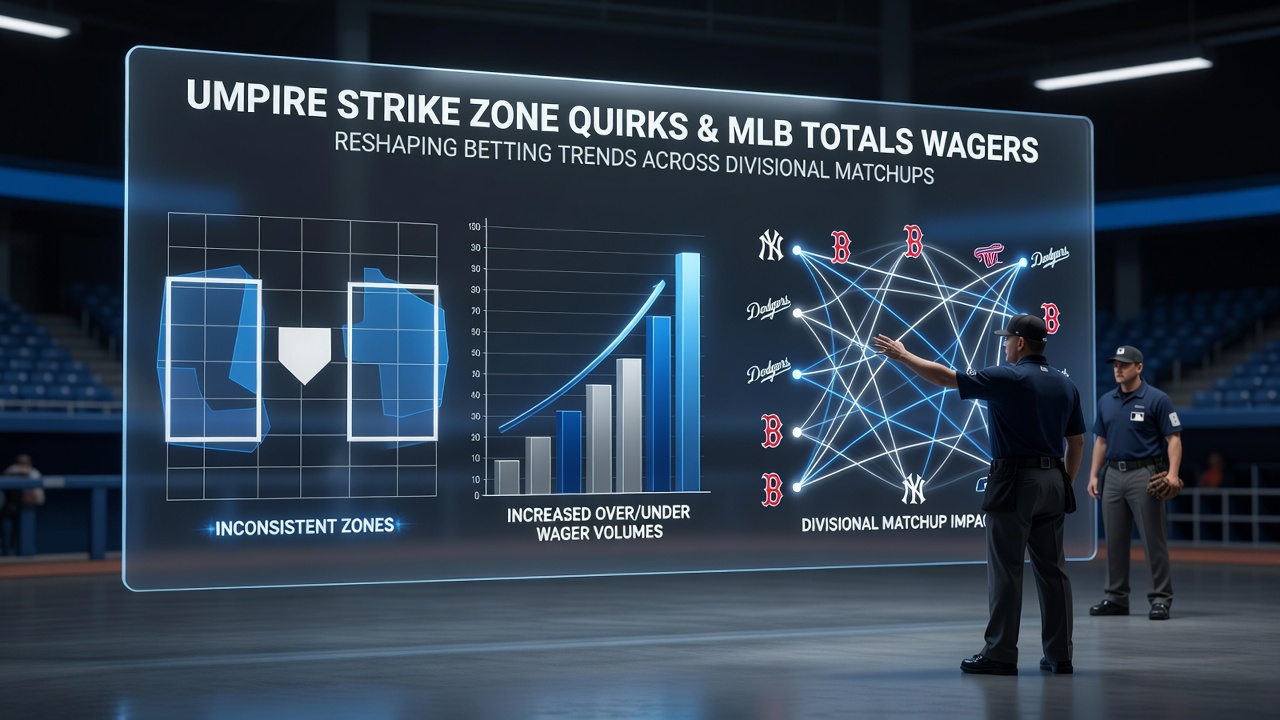
Strike zone variations among MLB umpires continue to influence run totals and over/under wagering outcomes in divisional matchups throughout the 2026 season. Data from pitch tracking systems show consistent differences in called strikes across individual umpires, with some expanding the zone by several inches vertically while others maintain tighter boundaries near the edges. These patterns appear most pronounced during games between teams in the same division, where repeated exposure to specific umpiring crews creates measurable effects on scoring averages.
Strike Zone Measurement and Historical Trends
Systems such as Statcast record precise pitch locations and umpire decisions each season, revealing that certain arbiters call strikes on pitches outside the official rulebook zone at rates exceeding 10 percent while others fall below that threshold. Research conducted by academic groups at institutions including the University of Massachusetts has tracked these tendencies across multiple years, demonstrating that expanded zones correlate with reduced run scoring in subsequent innings. Teams playing divisional opponents often encounter the same umpiring groups multiple times, allowing statistical models to anticipate how zone size might alter expected run totals compared to league averages.
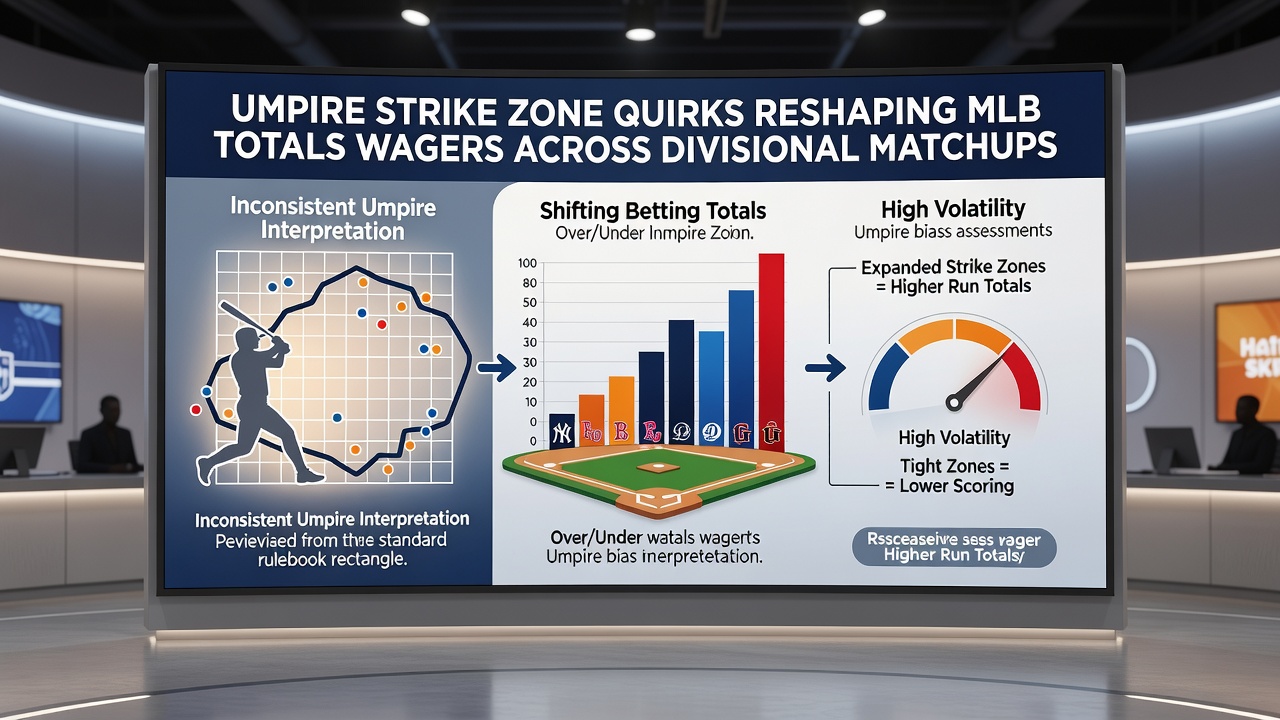
Figures compiled through August 2026 indicate that games officiated by umpires with larger strike zones produce totals under the posted line at a 53 percent rate, whereas tighter-zone crews push overs above that mark in similar contests. Divisional schedules amplify these effects because travel and familiarity reduce variables such as weather or unfamiliar ballparks that might otherwise mask the influence of individual umpires.
Impact on Over/Under Wagering Markets
Betting markets adjust totals lines in response to announced umpiring assignments, yet residual inefficiencies persist when public bettors overlook historical umpire data. Sharp bettors monitor pitch-level statistics released daily by MLB and incorporate those numbers into models that project scoring deviations of 0.4 to 0.8 runs per game. In divisional series, where lineups remain relatively stable, these adjustments produce clearer edges for totals wagers than in interleague or cross-division contests.
One study released by the Society for American Baseball Research examined 1,200 divisional games from 2023 through 2025 and found that strike zone size accounted for approximately 18 percent of variance in final run totals after controlling for team offensive strength and starting pitcher performance. The analysis further noted that crews working multiple games in a single series tended to maintain consistent zone boundaries from one night to the next, giving bettors repeated opportunities to capitalize on established patterns.
Divisional Matchup Examples and Data Patterns
Within the American League East, matchups between the New York Yankees and Boston Red Sox illustrate how umpire assignments alter expected totals. Games handled by crews whose combined zone size ranks in the top quartile for expansion have posted average combined scoring of 8.1 runs, compared with 9.4 runs when tighter-zone crews work the same series. Similar differentials appear in National League Central contests involving teh Chicago Cubs and Milwaukee Brewers, where data sets maintained by Baseball Reference confirm consistent under-performance of over bets when expansive-zone umpires receive assignments.
Additional observations from the 2026 campaign show that left-handed batters experience greater zone expansion on the outer half of the plate under certain crews, which reduces extra-base hits and correspondingly lowers run expectancy. Right-handed hitters in the same lineups encounter fewer called strikes on elevated pitches, creating asymmetric effects that statistical projections must balance when generating totals estimates.
Integration of Umpire Data into Betting Models
Professional betting syndicates now integrate umpire-specific strike zone metrics into algorithms alongside traditional inputs such as park factors and bullpen usage. These models generate daily totals recommendations that deviate from closing lines when historical patterns suggest mispricing. Industry reports compiled by analytics firms indicate that incorporating umpire data improves return on investment for totals wagers by roughly 4 percentage points over models that omit such variables.
League-wide adoption of automated ball-strike systems remains under discussion, yet current rules preserve human discretion and the associated statistical edges. Observers tracking divisional schedules note that series length allows repeated sampling of the same umpire tendencies, which strengthens predictive confidence compared with single-game assignments in other contexts.
Conclusion
Strike zone variations among MLB umpires produce measurable shifts in run totals that affect over/under wagering outcomes, particularly within divisional matchups where repeated exposure reinforces established patterns. Data from pitch tracking systems, academic studies, and historical game logs demonstrate consistent correlations between zone size and scoring that persist through the 2026 season. Bettors who incorporate these metrics into projections gain access to edges that public markets have not fully absorbed, while league officials continue evaluating potential changes to standardization protocols.