Tracking Elevation's Role in Scoring Dynamics for Mountain-Based Professional Teams
Cameron Berger · Jul 9, 2026
Tracking Elevation's Role in Scoring Dynamics for Mountain-Based Professional Teams
High-altitude venues create measurable shifts in scoring patterns for franchises based in mountain regions across the NFL, NBA, MLB, and NHL, and data compiled over multiple seasons shows consistent adjustments in total points, runs, and goals compared to sea-level sites. Teams such as the Denver Broncos, Colorado Rockies, Denver Nuggets, and Colorado Avalanche play home games where reduced air density alters ball flight, player endurance, and recovery rates in ways that influence final margins.
Atmospheric Factors at Play
Lower oxygen levels and thinner air at elevations above 5,000 feet reduce drag on projectiles while simultaneously increasing fatigue for athletes unaccustomed to the conditions, and studies from university physiology departments confirm these dual effects lead to higher offensive outputs in certain sports while suppressing them in others. Baseball sees the most pronounced changes because fly balls carry farther and curveballs break less sharply, whereas football passing games gain distance on deep throws but face challenges with kick accuracy.
League-Specific Patterns in Major Sports
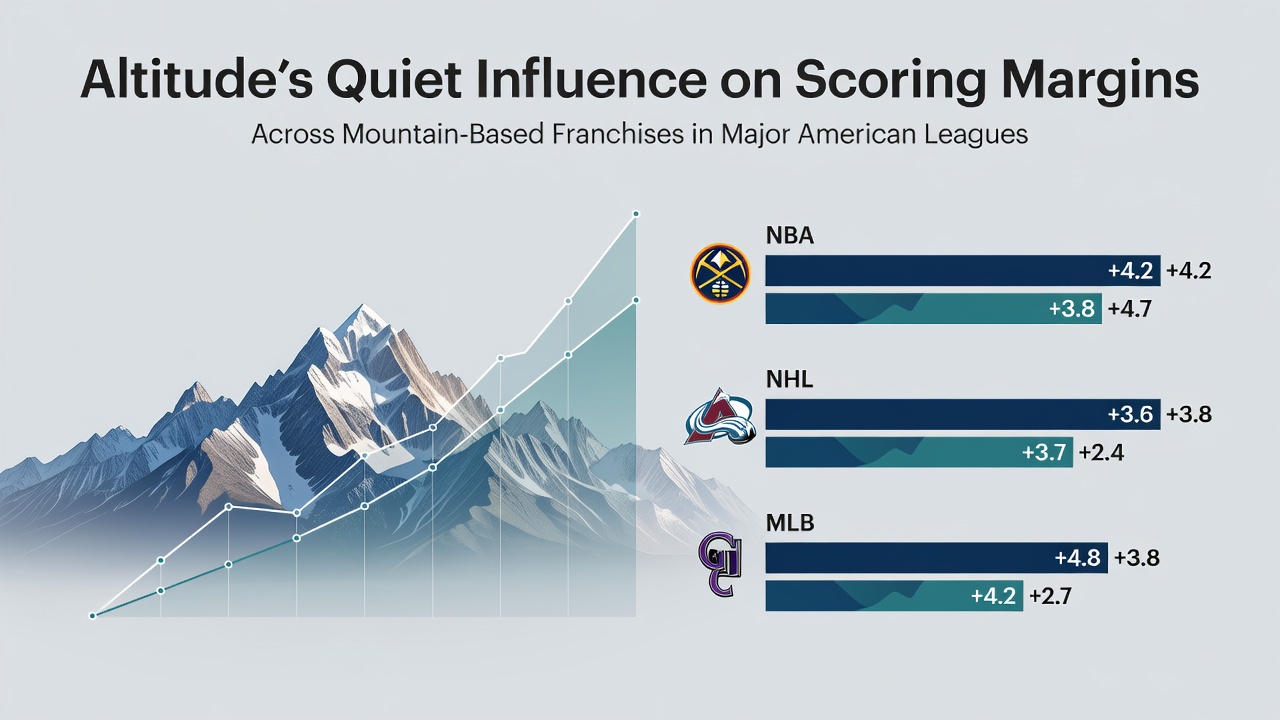
MLB records indicate that Rockies home games produce elevated run totals, with averages climbing by roughly 1.5 runs per contest relative to neutral venues, and visiting pitchers post higher earned-run averages when facing the thin air for the first time in a series. NFL data reveals Broncos contests feature wider scoring margins in the second half once visiting teams experience cumulative oxygen debt, although field-goal success rates drop measurably due to altered trajectory on kicks. NBA and NHL statistics show smaller but detectable differences, with Nuggets and Avalanche games often featuring quicker transitions and more transition scoring early before fatigue sets in during later periods.
Historical Data Trends Across Seasons
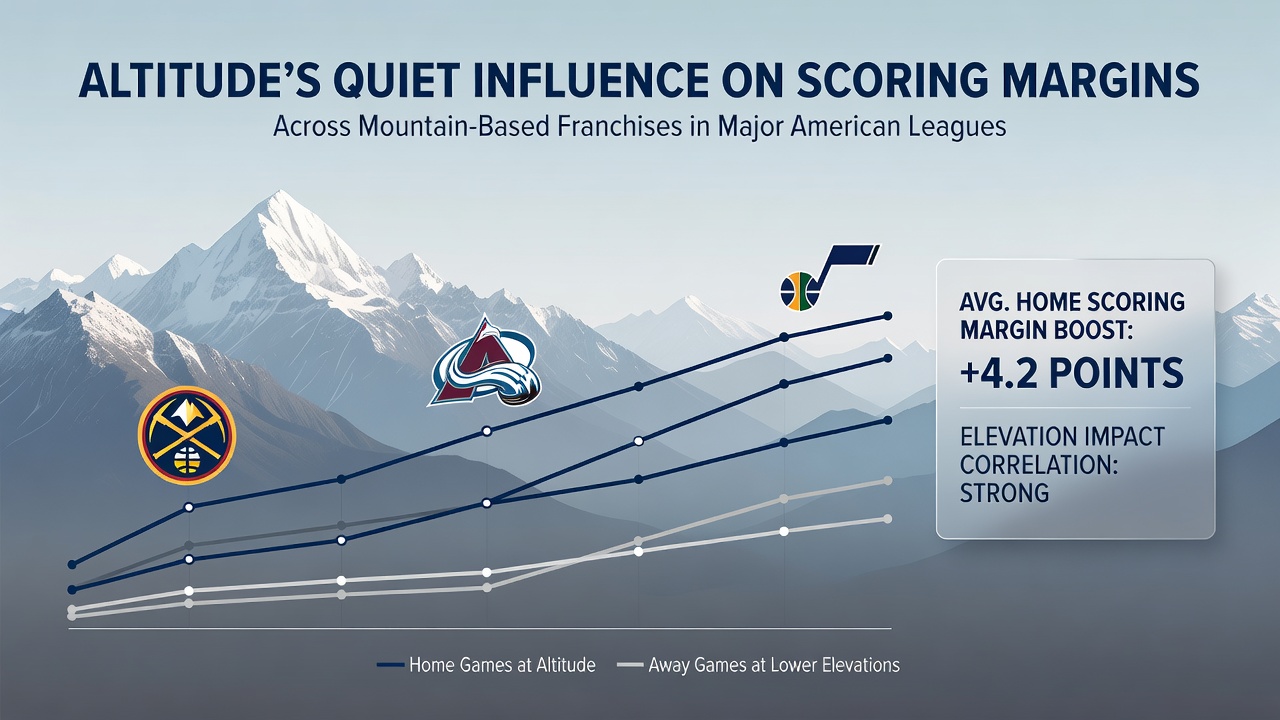
Analysis of box scores from 2010 through 2025 demonstrates that mountain-based teams maintain positive home scoring margins that exceed league averages by 3 to 5 points or equivalent units, and these edges persist even after adjustments for roster strength. Visiting clubs from lower elevations require additional acclimatization days, and performance logs kept by training staffs show measurable declines in sprint recovery and shot accuracy during initial quarters or innings. In July 2026 several franchises released updated internal reports that highlighted continued reliance on altitude-specific conditioning protocols to mitigate these effects during road trips to Denver.
Adaptation Strategies and Performance Records
Coaching staffs have implemented pre-game arrival schedules ranging from 24 to 48 hours for visiting players, and medical tracking from league-wide injury databases shows reduced soft-tissue strains once teams follow these timelines. Mountain franchises themselves maintain year-round altitude chambers and specialized drills that allow local athletes to sustain higher workloads, and comparative metrics reveal these programs contribute to tighter defensive margins at home. Observers note that expansion of similar facilities at other high-elevation training sites across the western United States has begun to narrow some historical gaps.
Research published by academic institutions in the western United States further links barometric pressure readings directly to changes in offensive efficiency ratings, and cross-referenced game logs confirm that scoring spikes align with days of unusually low humidity combined with high temperatures. Such combinations amplify the distance traveled by batted balls and thrown objects while accelerating dehydration rates for all participants.
Comparative Analysis With Sea-Level Counterparts
Franchises operating at or near sea level display more stable scoring distributions regardless of venue, whereas mountain teams exhibit pronounced home-road splits that widen during summer months when atmospheric conditions intensify. Aggregated statistics from league offices indicate that total points or runs in Denver-hosted games exceed combined averages from comparable matchups by measurable percentages, and these patterns hold across playoff and regular-season contexts alike. The differences become especially evident in overtime or extra-inning scenarios where endurance factors compound.
Conclusion
Elevation continues to exert a quiet but quantifiable influence on scoring margins for mountain-based franchises, and ongoing collection of performance metrics supports the persistence of these effects into future seasons. Teams and analysts track atmospheric variables alongside traditional statistics to refine preparation and roster decisions, while league-wide data sets provide the foundation for identifying consistent patterns across the four major American professional sports.