Thin Air and Betting Markets: Altitude's Role in Mountain State Totals Trends
Viktor Krüger · Jun 13, 2026

Thin Air and Betting Markets: Altitude's Role in Mountain State Totals Trends
High-elevation venues across states like Colorado, Utah, and New Mexico have long shaped how totals markets behave in baseball, football, and basketball, since reduced air density allows balls to travel farther while also accelerating player fatigue in prolonged contests. Observers note that these physical factors create measurable edges for those tracking scoring patterns rather than relying on standard projections, and data from multiple seasons shows consistent deviations from sea-level benchmarks. Researchers from institutions such as the University of Colorado have documented how oxygen levels drop by roughly 20 percent at 5,000 feet, which directly influences both offensive output and defensive recovery times during games.
Baseball Dynamics at Elevation
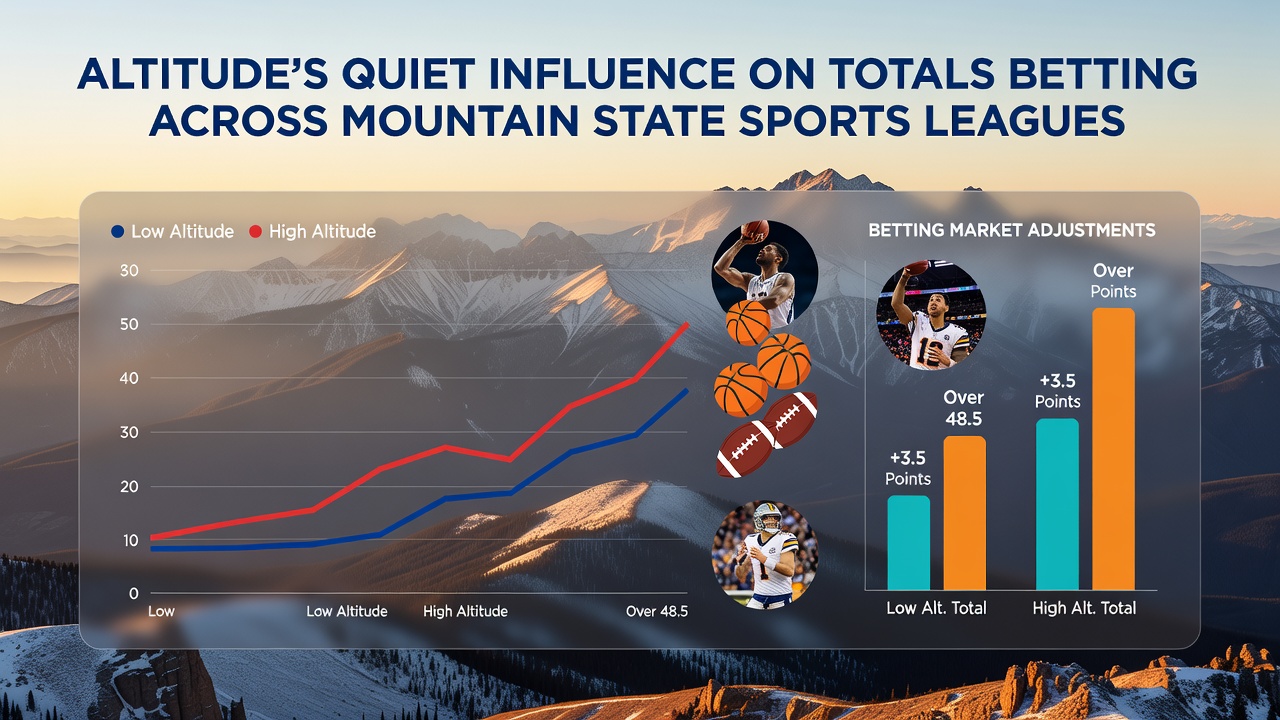
Coors Field in Denver sits at 5,280 feet, where studies indicate batted balls carry 10 to 15 percent farther than at lower altitudes, producing elevated home-run rates that push totals lines higher throughout the summer schedule. Pitchers face additional strain because breaking balls lose movement in thinner air, and this combination leads to more runs scored per game on average compared with venues near sea level. League-wide figures reveal that Colorado Rockies home games have historically posted totals exceeding the posted number in over 52 percent of contests during recent campaigns, a pattern that sharp bettors monitor when lines fail to adjust fully for environmental variables.
Football and Basketball Adjustments
Football programs at institutions including the University of Wyoming and Air Force Academy encounter similar conditions, where passes sail with extra distance yet stamina declines faster in the fourth quarter, often resulting in conservative play-calling that compresses scoring windows. Basketball presents a different profile because indoor arenas maintain climate control, yet visiting teams still report elevated heart rates and quicker onset of fatigue, which data from the National Collegiate Athletic Association shows correlates with higher foul rates and occasional spikes in transition scoring. Those who examine five-year trend lines note that totals in these mountain venues fluctuate more than expected during conference play, particularly when schedules include back-to-back road games for lower-elevation squads.
June 2026 Season Observations
Entering June 2026, early summer schedules across Mountain West conferences highlight continued emphasis on totals adjustments, with sportsbooks incorporating weather models that account for afternoon humidity drops at altitude. Figures from the NCAA and affiliated conferences indicate that teams based above 4,000 feet maintain a slight home-field scoring advantage in baseball and football, while road totals dip when visiting squads adapt poorly to the air quality. Analysts tracking these metrics point to specific series where totals opened two runs higher than comparable sea-level matchups, reflecting accumulated historical evidence rather than speculation.
Betting Market Responses
Bookmakers have responded by widening totals ranges in certain mountain matchups, yet residual inefficiencies persist when public bettors overlook secondary factors such as wind patterns or recovery protocols used by visiting medical staffs. Industry reports compiled by groups like the Sports Betting Alliance show that professional syndicates allocate resources toward altitude-specific modeling, which integrates ball-flight physics with player-tracking data to refine projections. This approach has produced documented edges in series played at venues like Salt Lake City's Delta Center and Albuquerque's Isotopes Park, where totals markets move more slowly than in coastal markets.
Practical Data Integration
Those monitoring these leagues often cross-reference elevation charts with box-score aggregates to identify when lines lag behind expected run or point totals. Research published through academic channels, including a 2024 review by the National Institutes of Health on environmental physiology in athletics, underscores how even modest altitude changes alter metabolic demands and, by extension, game flow. Bettors who layer this information atop standard statistical models report steadier outcomes when focusing on overs in home contests and unders when elevated squads travel to lower sites.
Conclusion
Altitude continues to exert a measurable yet frequently underappreciated influence on totals betting across mountain state sports leagues, driven by verifiable physical and physiological effects rather than narrative. Data from ongoing 2026 schedules reinforces that consistent tracking of elevation metrics, paired with league-wide scoring histories, supplies a factual foundation for line evaluation in these regions. As venues and teams refine preparation methods, the underlying environmental variables remain constant elements that shape market behavior season after season.