Surface Adjustments: The Influence of Track Variants on Exotic Bet Payouts in Thoroughbred Racing
Viktor Krüger · Jul 18, 2026
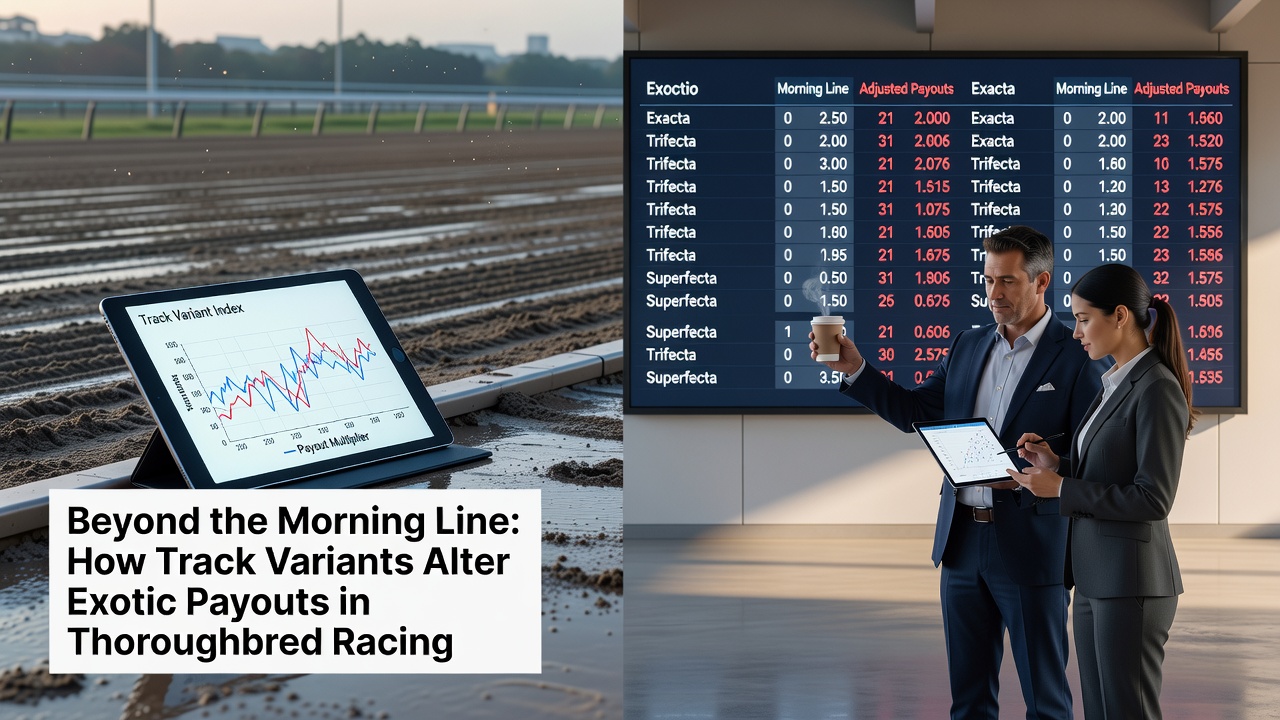
Surface Adjustments: The Influence of Track Variants on Exotic Bet Payouts in Thoroughbred Racing
Track variants serve as standardized adjustments that account for daily differences in racing surfaces, and these calculations directly reshape the speed figures used to evaluate contenders. When grounds run faster or slower than established pars, variant numbers modify raw times so that comparisons across races become consistent. Observers note that this process begins with par times derived from historical data at each track, and analysts apply the variant to normalize performances before morning lines are posted. Those adjustments carry forward into exotic wagering pools where exacta, trifecta, and superfecta payouts depend on the relative ordering of horses rather than outright winners alone.Defining Track Variants in Practice
Track variants quantify how much a surface deviates from its typical speed on a given day, and they are expressed as positive or negative numbers added to or subtracted from recorded times. Data from major North American tracks shows variants ranging from minus eight on lightning-fast days to plus twelve when moisture slows the footing. Researchers at racing analytics firms compile these figures by comparing multiple race times against benchmark pars, and the resulting number applies uniformly to every horse that competed that afternoon. Because exotic bets hinge on precise finishing orders, even modest variant shifts can reorder the perceived hierarchy among entrants and alter the distribution of payouts across the pool.
Morning Line Construction Under Variant Influence
Oddsmakers incorporate variant-adjusted speed figures when they assemble morning lines, and this step occurs well before the betting public sees the odds. A horse that ran a raw time two seconds slower than a rival may receive a superior figure once the variant is applied, and that reversal influences the initial odds posted for multi-leg wagers. Figures reveal that tracks with highly variable surfaces, such as those affected by regional weather patterns, produce larger swings in morning line values from one card to the next. Consequently, bettors who study variant trends before the lines appear can identify discrepancies that later affect exotic payoffs.
Effects on Exotic Payout Structures
Exotic payouts fluctuate when variants elevate or diminish the expected margins between horses, and this dynamic becomes most visible in races featuring several closely matched contenders. In July 2026, multiple graded stakes at East Coast venues recorded variants between plus four and plus seven, and those figures compressed the final margins in several trifecta combinations. Payouts for those sequences dropped below historical averages because the adjusted times suggested tighter competition than the raw clockings indicated. Conversely, when variants turned sharply negative, longshots posted competitive figures and occasionally produced outsized superfecta returns. Industry reports compiled by the National Thoroughbred Racing Association document these patterns across hundreds of races each season.

Regional Surface Differences adn Data Trends
Tracks in different climates exhibit distinct variant profiles, and these regional signatures influence how exotic bettors approach multi-race wagers. Facilities in arid zones tend to produce smaller day-to-day swings, whereas coastal and Midwestern venues show greater volatility after rainfall. According to data maintained by The Jockey Club, the average absolute variant at major circuits increased by 1.3 points between 2023 and 2025, and that rise coincided with more frequent extreme weather events. Bettors who track these geographic patterns can adjust their exotic selections when a meet moves from one surface type to another.
Case Examples from Recent Meets
One notable sequence occurred at a Mid-Atlantic track in early summer 2026 when a plus-nine variant transformed several allowance races. Horses previously rated four lengths apart received nearly identical adjusted figures, and the resulting exacta pools paid significantly less than morning line projections suggested. Another instance at a California oval featured a minus-six variant that allowed two longshots to post figures competitive with the favorites; the superfecta in that race returned more than four times the median for similar fields. Observers who reviewed the variant reports before post time captured those shifts and structured their exotic tickets accordingly.
Analytical Tools and Pool Dynamics
Modern software platforms integrate live variant calculations into exotic probability models, and these tools update as each race concludes. The models recalculate implied probabilities for every combination once the new variant is published, and sharp changes in those probabilities often precede large swings in exotic payouts. Pool sizes for multi-leg wagers have grown steadily, with carryover jackpots reported at several tracks during the 2026 season. Because the underlying speed figures depend on variant accuracy, any delay or revision in variant release can temporarily distort the pricing of remaining exotic tickets.
Conclusion
Track variants function as an essential layer of normalization that links raw performance data to the final ordering of exotic payouts, and their influence extends from morning line construction through post-race pool settlements. Data compiled across North American and international circuits demonstrates consistent effects on payout distributions whenever surface conditions deviate from established pars. Those who monitor variant trends alongside traditional handicapping factors gain a clearer view of how adjusted figures reorder probabilities in exacta, trifecta, and superfecta wagers. Continued refinement of variant methodologies, coupled with expanded data collection, will likely maintain their central role in thoroughbred racing analytics.