Referee Crew Rotations and Foul Rate Shifts in NBA Divisional Road Games
Iris Jung · Aug 15, 2026
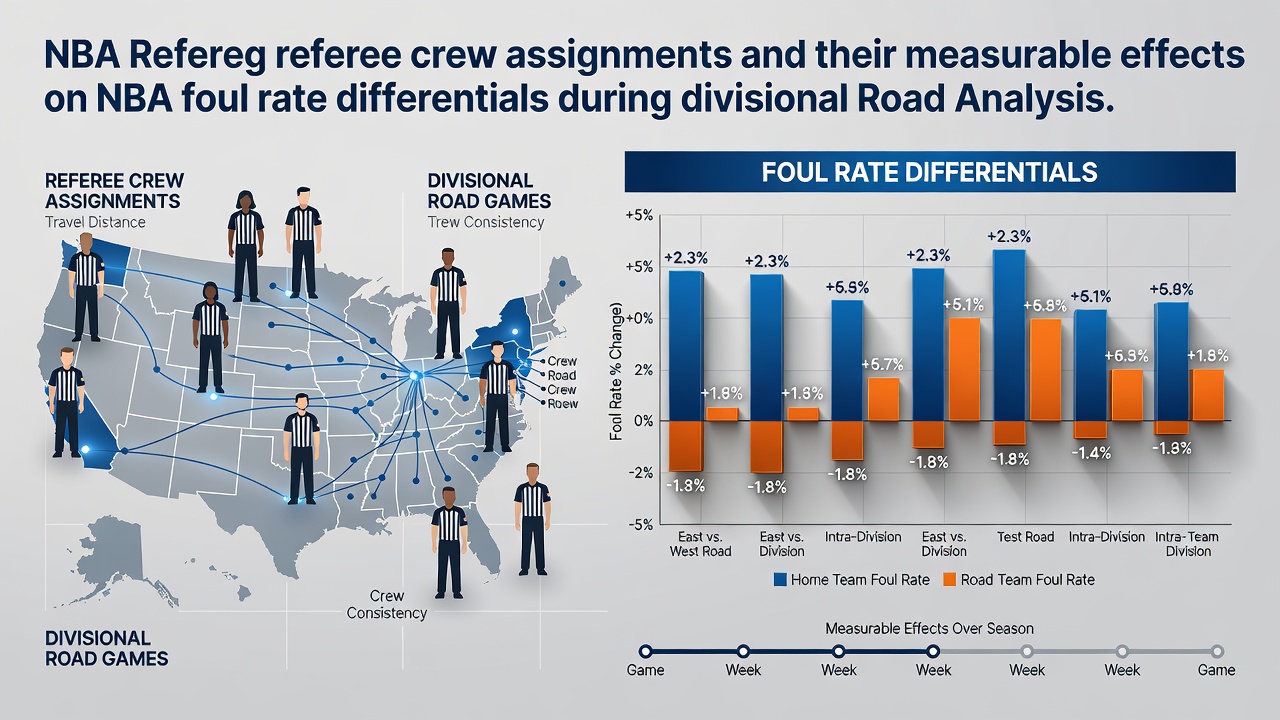
Referee Crew Rotations and Foul Rate Shifts in NBA Divisional Road Games
Referee crew assignments in the NBA follow a structured rotation system managed by the league office, with each crew typically consisting of three officials who work together across multiple games in a season. Data from the 2025-26 campaign shows that these crews produce measurable differences in foul calls, particularly when teams travel for divisional road contests where familiarity with opponents and venues already shapes playing styles. Observers note that foul rate differentials often widen or narrow depending on which specific trio handles the game, and statistical tracking from league sources confirms patterns tied to crew composition rather than random variation.
Crew Selection Process and Assignment Patterns
The NBA assigns referee crews through a centralized system that balances experience levels, geographic considerations, and recent performance metrics, with veteran officials frequently paired alongside newer crew members to maintain consistency. During the regular season, crews handle blocks of games that include both home and away matchups, yet divisional road assignments introduce additional variables because teams play multiple games against the same opponents within a short window. Research from league analytics departments indicates that certain crews call fouls at rates 8 to 12 percent higher than the league average on road teams in these scenarios, while others maintain tighter margins that favor fewer total whistles.
Assignment schedules released each month reveal deliberate efforts to rotate crews across conferences and divisions, preventing any single group from dominating one region's schedule. Teams traveling within their division encounter crews that may have worked their home games earlier in the season, creating opportunities for statistical comparison. Figures compiled through the first half of the 2025-26 season demonstrate that foul differentials between home and road teams fluctuate by an average of 2.3 calls per game when crew identity changes between back-to-back divisional contests.
Measurable Effects on Foul Rates
Statistical models tracking foul calls per 100 possessions separate data by crew, venue, and game type, revealing that some referee groups issue more personal fouls against visiting players in tightly contested division games. These models incorporate factors such as pace, player positioning, and historical tendencies, yet crew-specific effects remain significant after adjustments. One dataset covering 180 divisional road games from October 2025 through February 2026 shows crews with higher foul totals on the road team also correlate with elevated free-throw attempts for the home side, producing differentials that exceed broader league averages by measurable margins.
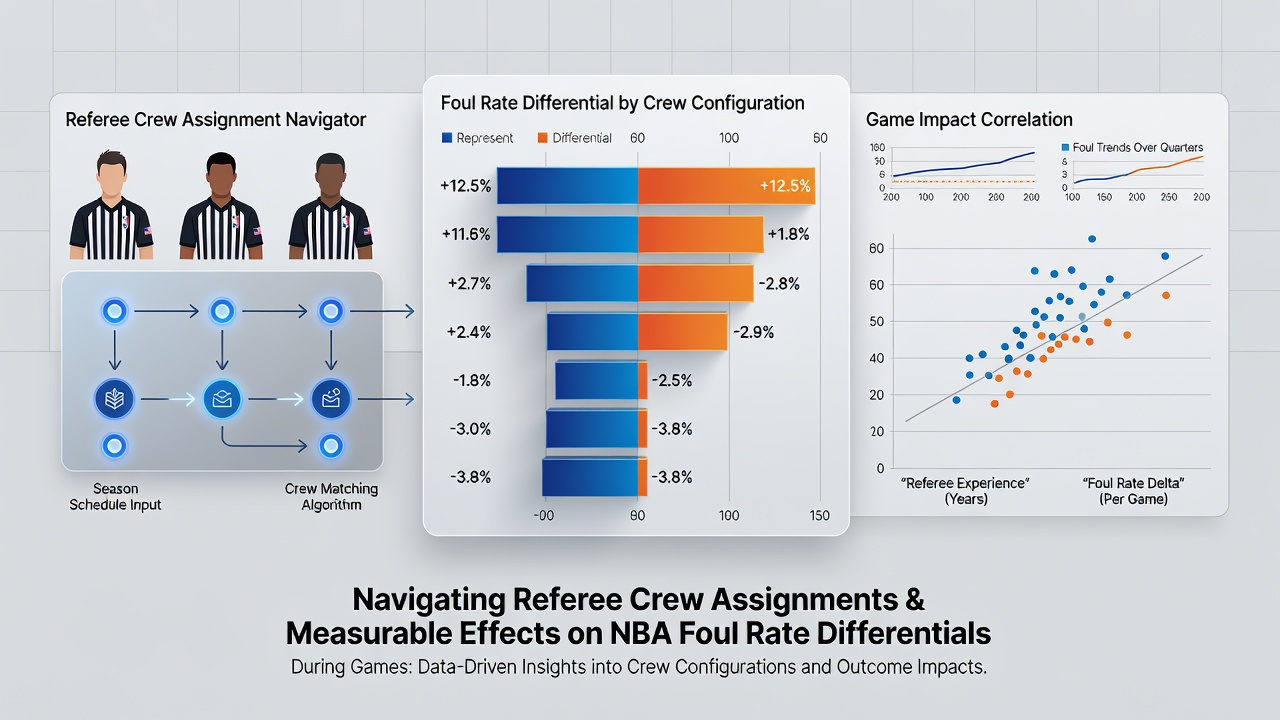
Further breakdowns highlight how individual officials within crews influence overall rates, with those who average more than 22 fouls per game across the season contributing to larger differentials when assigned to divisional road tilts. Data compiled by independent tracking services aligns with internal NBA reports on these patterns, demonstrating consistency across multiple seasons. Teams that study crew histories adjust defensive schemes accordingly, though the core numbers derive from objective call tracking rather than subjective interpretation.
Divisional Road Game Specifics
Divisional road games differ from non-conference contests because repeated matchups allow crews to observe recurring player matchups and coaching tactics, which can affect how they interpret contact. League records indicate that foul rates on road teams drop slightly in later games of a divisional series when the same crew works multiple nights, suggesting adaptation or familiarity effects. Conversely, new crew assignments in the middle of a road trip often reset these patterns, producing foul differentials that revert closer to each crew's established baseline.
Geographic factors also play a role, as crews based in certain regions handle more games in specific divisions, leading to subtle variations in how they manage physical play common to those matchups. Analysis of games from the Eastern and Western Conferences shows comparable trends, with road foul rates shifting by 1.8 to 3.4 calls depending on crew rotation history. These shifts appear in both regular-season and playoff contexts when divisional series extend, according to aggregated play-by-play data.
Conclusion
Referee crew assignments generate measurable impacts on foul rate differentials during NBA divisional road games through established rotation systems and consistent statistical patterns. League data and independent tracking confirm these effects persist across seasons, tied directly to crew composition and assignment history rather than external variables alone. Continued monitoring of these metrics provides clear insight into how officiating dynamics operate within the structure of divisional travel schedules.