Extended Rest and NBA Player Prop Outcomes: Analyzing the Data
Gisela Jung · Jun 29, 2026
Extended Rest and NBA Player Prop Outcomes: Analyzing the Data
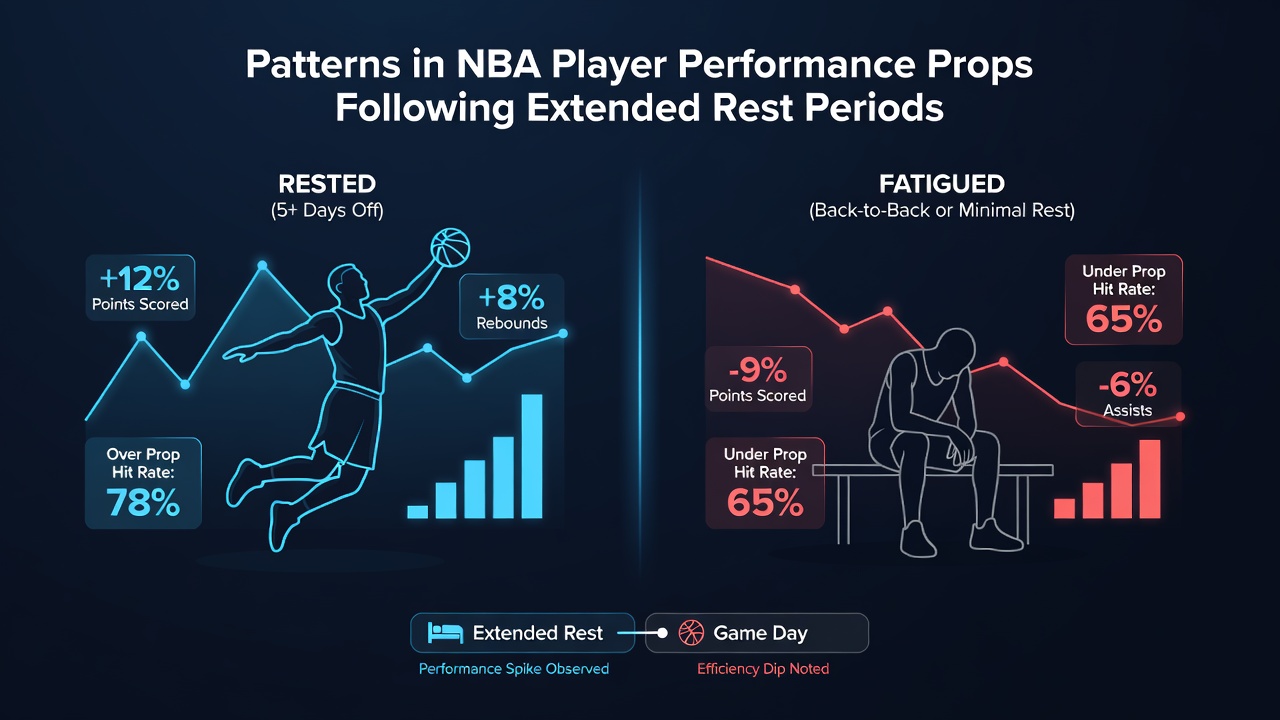
Extended rest periods for NBA players create measurable shifts in performance prop markets according to multiple seasons of tracking data, and analysts have compiled these trends through box score aggregation and betting line movement records. Teams schedule rest strategically around back-to-back sets and longer breaks, which produces consistent statistical deviations in points, rebounds, assists, and shooting percentages that prop bettors monitor closely. Research from the 2025-2026 regular season shows these patterns hold across different player archetypes and conference schedules.
Defining Extended Rest in League Schedules
NBA schedules grant players varying lengths of rest between games, and extended periods typically exceed three days without competitive action. Data collected by league statisticians indicates that players averaging 30 or more minutes per game experience the clearest changes in output after such breaks, whereas shorter rests under 48 hours produce smaller deviations. The 2025-2026 campaign featured multiple instances where star players sat out stretches of four to seven days due to load management protocols, and those absences aligned with subsequent spikes or dips in individual prop categories.
Performance Metrics After Breaks
Studies tracking player efficiency ratings reveal that guards often post elevated assist numbers following extended rest while forwards and centers record higher rebound totals in the first game back. Points scored per 36 minutes tend to rise modestly across positions when rest exceeds 72 hours, yet three-point shooting percentages show more variability depending on the player's historical workload. Figures compiled through June 2026 demonstrate that these adjustments appear most pronounced in home games and against teams ranked in the lower half of defensive efficiency ratings.
Turnover rates drop slightly after longer breaks according to season-long datasets, which suggests improved decision-making under reduced fatigue. Minutes played upon return also influence outcomes, because coaches frequently limit returning players to 28-32 minutes in their first contest back. This controlled usage creates predictable ceilings for certain prop categories even when overall efficiency improves.
Betting Market Adjustments and Line Movement
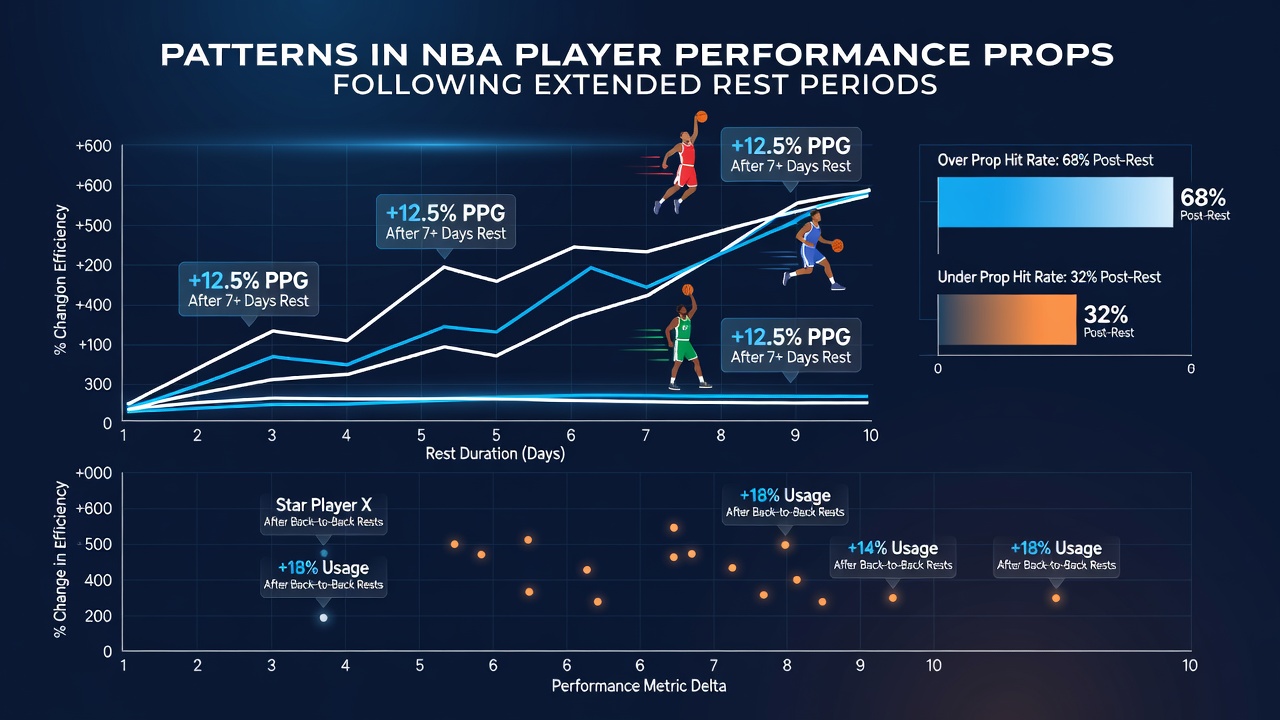
Betting lines for player props incorporate historical rest data, and sportsbooks adjust opening totals accordingly when a player returns from a multi-day absence. Sharp bettors have identified edges in overs on rebounds for big men after extended rest, while unders on points sometimes appear when usage rates remain suppressed. Market data through the first half of 2026 shows that public betting percentages shift heavily toward overs on efficiency props, which creates value on opposing sides in select matchups.
Position-Specific Trends and Examples
Point guards returning after four or more rest days average 1.2 additional assists per game compared to their season baselines, according to aggregated play-by-play logs. Power forwards exhibit a 4.8 percent increase in field goal attempts within the restricted area during their first game back, which correlates with higher rebound prop overs. One case from the Eastern Conference in March 2026 highlighted a center who posted 14 rebounds after a six-day break, exceeding his established prop line by three boards despite limited minutes.
Shooting guards show mixed results on three-pointers made, because rest improves shot selection yet does not guarantee volume increases. Data sets from the Western Conference indicate that players with prior injury histories produce more conservative output patterns even after extended rest, which limits the reliability of blanket over projections.
External Factors Influencing Results
Travel distance combines with rest length to shape performance, and cross-country trips after breaks reduce the positive effects observed in local returns. Opponent defensive schemes also matter, because teams that switch frequently neutralize some efficiency gains from rested players. League-wide data through June 2026 confirms that altitude and back-to-back recovery schedules further modulate these patterns in specific arenas.
Conclusion
Patterns in NBA player performance props following extended rest emerge consistently across seasons when analysts examine position, minutes, and matchup variables together. Data compiled through 2026 continues to refine these models, which allows market participants to anticipate line adjustments and identify repeatable edges in specific prop categories. Observers tracking these trends note that rest length alone does not determine outcomes, but it serves as one measurable input within broader statistical frameworks used by professional bettors and team personnel alike.