Elevation Effects on MLB Betting: Denver's Unique Challenges and League-Wide Implications
Cameron Berger · Jun 8, 2026

Elevation Effects on MLB Betting: Denver's Unique Challenges and League-Wide Implications
Baseball in Denver operates under different physical conditions than games played at sea level, and those differences directly influence how bettors approach totals, player props, and game outcomes. Coors Field sits at 5,280 feet above sea level, which means the air density drops enough to let batted balls travel farther while also affecting pitch movement and stamina for pitchers who aren't accustomed to the thinner atmosphere.
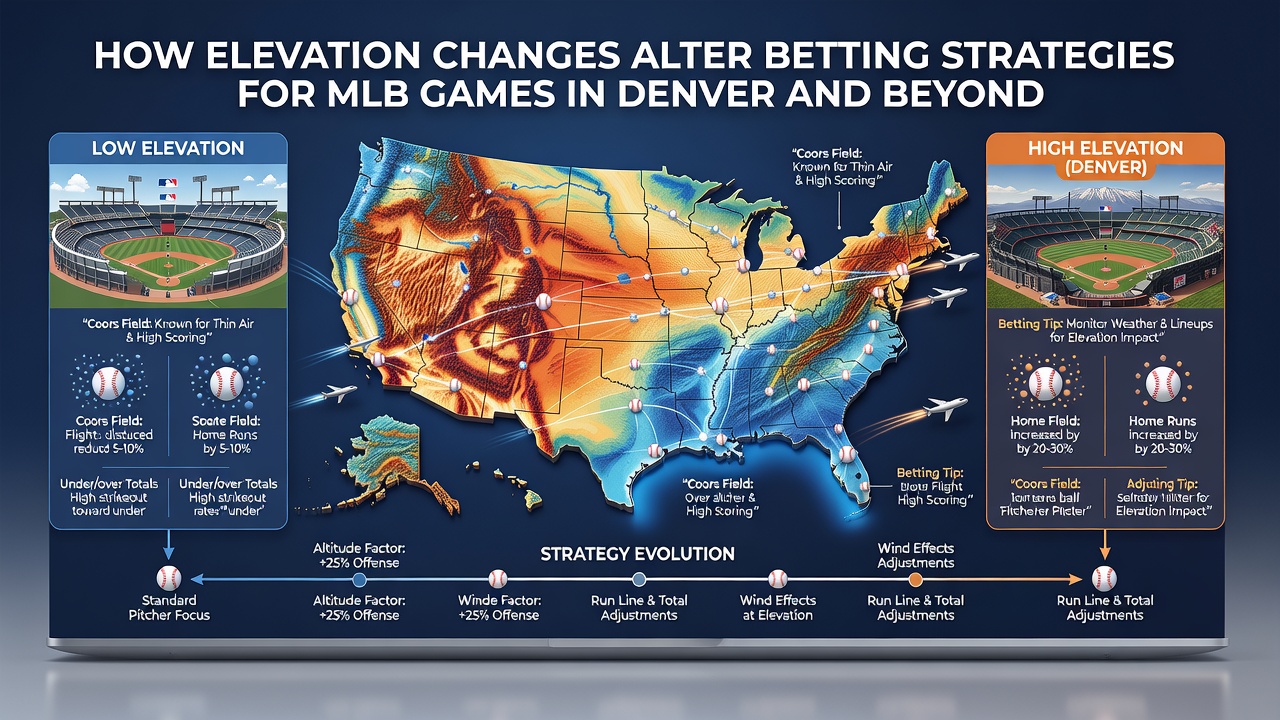
Data from multiple seasons shows that home runs occur at higher rates in Denver than in any other MLB park, with researchers documenting increases of 20 to 30 percent compared to league averages in similar weather conditions. Bettors who track these patterns often adjust their totals wagers upward when the Rockies host opponents, while also monitoring how visiting pitchers perform after acclimating for a day or two.
Physics Behind the Ball Flight
Lower air density reduces drag on the baseball, allowing fly balls to carry an extra 20 to 30 feet on average according to studies conducted by atmospheric scientists. This effect compounds when temperatures rise and humidity falls, conditions common during summer afternoons in the Rocky Mountains. Those who've analyzed Statcast data note that exit velocities that produce routine outs elsewhere become extra-base hits at altitude, shifting run expectancy models that sportsbooks use to set totals.
Spin rates on breaking balls also lose effectiveness because the Magnus force weakens in thinner air, which means curveballs and sliders flatten out more than they would at lower elevations. Pitchers who rely heavily on movement see their strikeout rates dip, while contact hitters gain an edge that shows up in batting average on balls in play. Observers tracking these trends often find value in player props that target Colorado hitters when the forecast calls for warm, dry weather.
Strategic Adjustments for Totals and Run Lines
Bookmakers have incorporated elevation into their models for years, yet line movement still reveals opportunities when public perception lags behind updated weather or roster data. Totals in Denver games have landed over the posted number in roughly 55 percent of contests since 2015, a figure that holds after accounting for wind and temperature variables. Bettors who wait for late line adjustments often find the over priced more attractively once sharp action hits the board.
Run lines present another layer because the home team benefits from both offensive inflation and familiarity with recovery between innings. Research indicates that the Rockies cover the run line more frequently at home than on the road, though that edge narrows against teams with deep bullpens that can absorb extra runs. Those studying historical splits recommend cross-referencing altitude effects with bullpen usage patterns rather than relying on elevation alone.
Extending the Model Beyond Denver
Other parks experience milder versions of the same dynamics. Chase Field in Phoenix sits at 1,100 feet, producing smaller but measurable increases in home run rates during day games when temperatures climb above 100 degrees. Similarly, stadiums in Texas and parts of the Southwest show seasonal spikes that reward bettors who track temperature-adjusted park factors rather than treating all venues equally. Data compiled by the National Oceanic and Atmospheric Administration helps quantify these atmospheric variables across regions.
Teams that travel from sea-level cities to Denver face additional recovery challenges that manifest in lower on-base percentages during the first game of a series. Pitchers making their initial start at altitude often record higher walk rates and reduced velocity after the fourth inning, patterns that sharp bettors factor into first-five-innings wagers. By the second or third game, acclimation reduces some of these disadvantages, which explains why series totals sometimes move toward the under after opening day.
Player Prop Nuances and Roster Considerations
Individual player performance data reveals that certain hitters maintain elevated slugging percentages in Denver regardless of opponent, while others see only temporary gains tied to specific weather windows. Power hitters with high launch angles benefit most, whereas ground-ball specialists show minimal change. Bettors who review granular Statcast splits can isolate these edges instead of applying blanket altitude adjustments to every prop.
Pitching staffs that carry several high-spin relievers sometimes mitigate the effects better than starters who work deeper into games. Teams with strong defensive alignments behind their pitchers also limit extra bases because more balls stay in the park rather than clearing fences. Recent data through June 2026 continues to show that defensive metrics interact with elevation in ways that simple run totals overlook, prompting more detailed modeling among professional bettors.
Conclusion
Elevation creates measurable, repeatable impacts on MLB outcomes that extend from Denver to other high or moderate altitude venues. Bettors who integrate atmospheric data, historical splits, and roster-specific adjustments into their process gain a clearer picture of where lines may misalign with actual probabilities. As tracking technology and weather modeling improve, these edges remain accessible to those who treat altitude as one variable among many rather than an isolated factor.