Altitude Shapes Wagering Trends Across National League West Markets
Cameron Berger · Jul 27, 2026
Altitude Shapes Wagering Trends Across National League West Markets
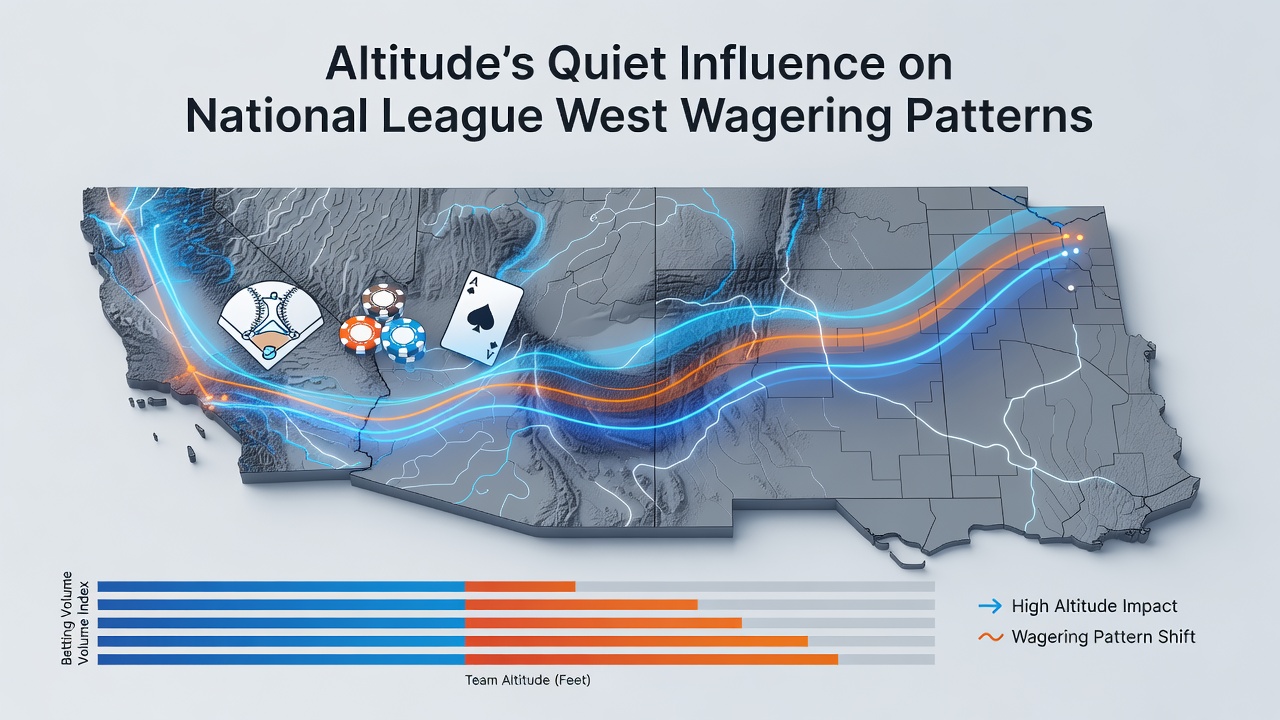
High elevation at Coors Field in Denver continues to alter run production, pitching effectiveness, and game totals for National League West contests, and those measurable shifts feed directly into how sportsbooks set lines and how bettors adjust their positions. Teams in the division play at sea level in San Francisco, Los Angeles, San Diego, and Phoenix, yet they face a stark change when they visit the Rockies, where thinner air lets batted balls travel farther and breaking pitches lose movement. Data compiled through the 2026 season shows home teams at Coors Field posting elevated scoring rates that exceed league averages by double-digit percentages in multiple categories, while visiting clubs often post lower on-base percentages and higher earned-run averages during those series.
Historical Performance Patterns at Elevation
Records maintained by MLB since the stadium opened reveal consistent spikes in runs scored, hits, and home runs whenever games occur in Denver, and those trends hold steady across decades even as ballpark dimensions and equipment rules have changed. Pitchers who rely on sharp breaking balls see their strikeout rates decline noticeably, whereas contact-oriented hitters gain extra bases on fly balls that would otherwise stay in the yard at lower elevations. Observers note that road teams often adjust lineups by inserting more power hitters for Denver series, a move that further influences total-run betting markets and player-prop options. Studies from Colorado State University have quantified the effect, showing that fly balls gain roughly 10 to 15 percent more distance at 5,280 feet compared with sea-level venues, which directly expands the range of outcomes sportsbooks must price.
Market Adjustments and Line Movement
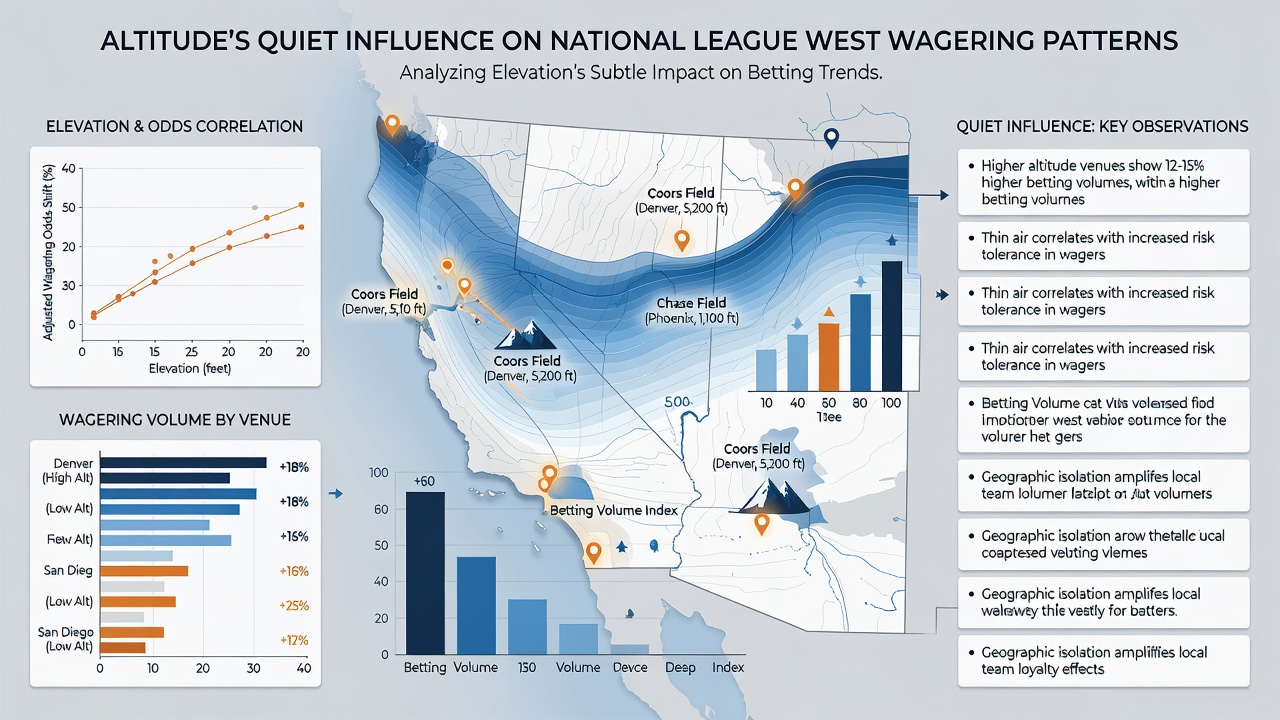
Oddsmakers incorporate these altitude-driven variables when releasing opening totals and run-line spreads, and the adjustments appear most pronounced in games scheduled at Coors Field during the summer months when temperatures climb and air density drops even lower. Public bettors frequently target the over on totals for Rockies home games, yet sharp money often lands on the under once line movement reflects late pitching changes or weather updates. In July 2026, multiple NL West series at elevation produced totals that landed within a narrow window around the adjusted number, demonstrating how quickly markets price in the known environmental boost. Those who track line history see repeated instances where totals open higher in Denver than at other division parks, then tighten as sharp action arrives from syndicates that specialize in park-factor models.
Recent Data Through Mid-2026
Season-to-date figures for 2026 show the Rockies home run rate per game at Coors Field remaining above the NL average, while opposing pitchers post walk rates that climb as they attempt to avoid the heart of the strike zone in thinner air. Division rivals traveling from coastal cities encounter recovery challenges after series in Denver, and those fatigue effects sometimes carry into the next road contest, creating secondary value in betting markets that extend beyond the immediate matchup. Research published by the Society for American Baseball Research indicates that teams leaving Denver post an on-base percentage roughly four points lower in their following series, a subtle edge that advanced bettors incorporate when evaluating divisional totals and run lines. Weather patterns in July 2026 amplified the altitude variable during a stretch of unusually warm afternoons, pushing several game totals upward by half a run in the betting markets.
Player Props and In-Game Wagering Implications
Individual player props tied to home runs, total bases, and strikeouts shift measurably when elevation enters the equation, and sportsbooks now release separate prop lines for Denver contests rather than applying a uniform league template. Batters with fly-ball tendencies see their implied probabilities rise sharply on the betting boards, while ground-ball specialists maintain steadier numbers regardless of venue. Live betting during Rockies home games often features rapid movement on run totals after the first inning, because early data on exit velocity and launch angle confirms whether the altitude boost is materializing as expected. Those tracking pitch-count trends note that starters frequently exit earlier at Coors Field, opening the door for bullpen props that reflect the higher run environment and the thinner bench options available to visiting managers.
Division-Wide Ripple Effects
Because every NL West club visits Denver multiple times each season, the altitude factor influences scheduling decisions, rest considerations, and even the timing of roster moves aimed at specific series. Data from the 2026 schedule shows that teams with deeper pitching staffs sometimes allocate extra arms for Denver trips, a strategy that appears in betting market pricing when rotation announcements move lines. Observers tracking divisional standings note that home-field advantages at sea-level parks receive less emphasis in models once the Coors Field variable is accounted for, leading to tighter spreads in inter-division games played outside Denver. The cumulative effect creates a layered set of inputs that professional bettors must weigh alongside traditional metrics such as team ERA and OPS when constructing positions across the full slate.
Conclusion
Elevation continues to function as a measurable, recurring variable that shapes both statistical outcomes and wagering markets throughout the National League West, and the patterns observed through July 2026 align closely with historical benchmarks established over multiple seasons. Sportsbooks adjust totals and props accordingly while bettors apply park-factor adjustments to identify value in both pregame and live markets. The interplay between altitude-driven scoring and market responses remains a core element of analysis for anyone examining divisional betting trends.